JTF Academy · Blog
What is the CARDS Loop and how is it keeping our Responders Safe?
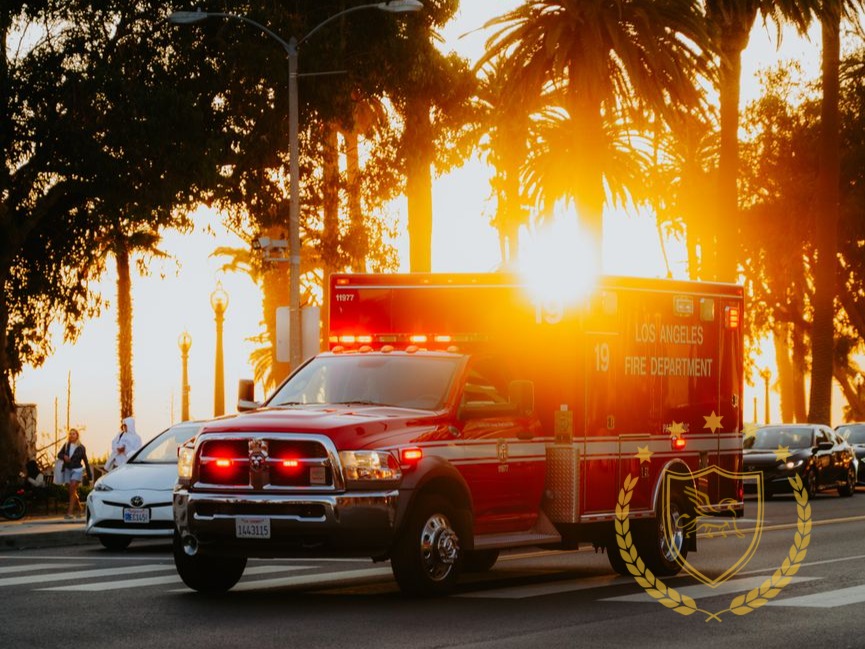
Whether you are a Firefighter, Paramedic or First Responder, you spend endless hours training to perfect your craft. Yet aside from the multiple hazards and dangers faced by our Responders on a daily basis, little has improved their safety in light of the “human factor” more than the CARDS Loop.
CARDS (Careful Assessment, Recognize, Deal, and Survive) has been developed by Professional Responders and Risk Management experts to address the emerging and steadily rising risk of violence and aggression faced by Responders on a daily basis.
From a Risk and Threat management and mitigation perspective, it is very simple: there is no reason to send our Responders blind into calls without proper training, support and tools. Responders, much like law enforcement, respond at all hours of day and night to a wide variety of calls – they should therefore be adequately prepared, trained and equipped.
From a risk management perspective (in relation to the epidemic of violence), calls are categorized into 3 categories:
- Calls that involve obvious danger to responders are typically filtered by Dispatch protocols. Calls of this nature will usually require law enforcement to clear the scene before other responders can safely respond.
- Calls that involve no known risks to Responders beyond the regular occupational safety hazards. These make up the bulk of calls faced by Responders, and luckily have positive outcomes (no one got hurt, threatened or assaulted) for frontline staff. Of course, only once a call is fully over is when we can statistically affirm that it was a “safe” call.
- Calls that do not inherently appear to pose any threats to Responders, but result with a negative outcome – abuse, assault (verbal or physical), threats, to name a few. These types of calls are sadly on the rise worldwide, based on the data.
EMS SST (Emergency Medical Services Safety & Survival Training) and the CARDS Loop have been created to address this deficiency. The CARDS loop is specifically taught via our Emergency Medical Services Safety and Survival Training course.
Careful Assessment, Recognize, Deal, and Survive: It is a response protocol – robust and flexible – which can be self standing within a department or agency, or can be Dispatch supported (by your own current dispatch system), allowing for a more comprehensive response management.
Along with the response protocol comes a thorough training that brings all responders on a same page, so all members know what to expect and how to respond. The training touches on elements of communication, de-escalation, short-term stress response, team work, threat recognition and management, and much more.
Some departments choose to “CARD” every call, and are prompted for a CARDS status by Dispatch shortly after arrival on scene. Other departments or agencies choose to have CARDS be responder activated. A number of types of calls should be automatically “CARDed” – calls that are the result of violence, large crowds, substance abuse, intoxication, to name a few. But the flexibility of the loop allows for any Responder to “CARD a call” at any point, which in itself triggers a numbers of measures to help responders stay safe – stay as a team, park vehicles/apparatus/ambulance in a specific way (if applicable), de-escalate as needed, stay vigilant etc…
EMS SST allows responders to gain knowledge, skills, and insights to better recognize potential risks in dealing with individuals who are dangerous due to mental health and addiction issues, how to better manage individuals in crisis, and most importantly respond and operate as a team.
As we know there are many threats and risks out on every call – EMS SST and CARDS brings skills, knowledge, and a solid protocol to equip our Responders with.
Feel free to contact us or check out https://academy.jtfcanada.com/ems-sst/ for more details.
Originally published by Vali Majd, CEO - JTFAcademy on the Academy blog.